

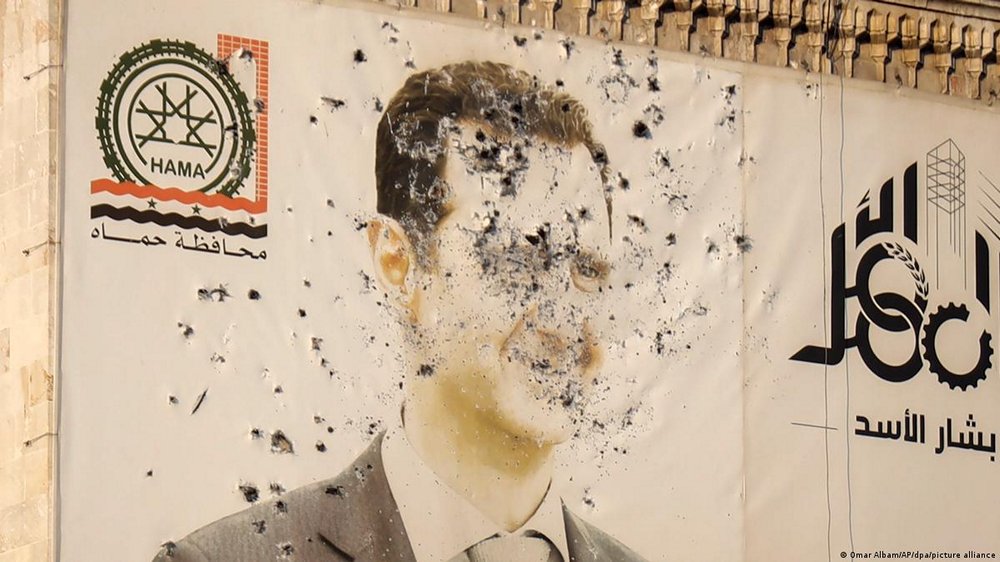
In her first publication as a visiting RSC Research Fellow, Ms. Noor Kahwash produced an insightful analysis entitled, “Sectarian Violence and the Persistence of Crisis Governance in Post-Assad Syria.” Published on 31 July, the 10-page report assessed the rise of Syrian President Ahmed al-Sharaa in December 2024 and examined the pressing challenges and responsibility for governing a unified Syrian state.
Ms. Kahwash noted that “roughly 18 months since Assad’s ousting, the transition from insurgency to government has been more institutional than political. National authority remains heavily centralized under al-Sharaa, while many former HTS commanders implicated in wartime abuses have been promoted to senior positions within Syria’s security institutions. More importantly, the new leadership has failed to dismantle many of the sectarian governing practices inherited from the former order.”
Her argument does not suggest that “the transitional authorities and the previous Assad regime are identical in ideology or political character; their foundations — one Islamist, the other nominally “secular” — make that clear. Rather, it identifies a continuity in governing method: in both cases, appeals to national unity and conspiracy have been used to justify centralized rule and avoid accountability for sectarian violence. In both cases, too, sectarian armed forces were incorporated into the state without genuine integration, preserving the factional and communal loyalties on which the ruler’s authority ultimately rested.”
She went on to state that “the March 2025 killings of predominantly Alawite civilians along Syria’s coast and the July 2025 violence involving Druze and Bedouin communities in Suwayda demonstrate the consequences of this continuity: rather than dismantling Assad’s sectarian system of rule, the transitional government has reproduced practices that allow social divisions to be mobilized in the service of crisis management and centralized authority.”
Thus, her paper “assesses the mechanisms and costs of these continuities and identifies the institutional reforms needed to prevent Syria’s transition from reproducing another Assad-era form of governance.”
A current RSC Research Fellow, Ms. Noor Kahwash is a graduate of McMaster University in Canada.